Best Practices, Pros & Cons, Advantages/Disadvantages and more!
Questionnaire vs Survey: Differences, Advantages and Best Practices
Get a better understanding of the key differences between questionnaires and surveys. Learn when to use each of them and best practices.

In today’s data driven world understanding the difference between questionnaire and survey is crucial for effectively collecting feedback data. To obtain this information, two commonly used methods are questionnaires and surveys. These tools let us explore people’s feedback and experiences.
Understanding the Power of Data Collection
In today’s fast paced world data is invaluable. Whether you’re a market researcher seeking consumer insights or an organization striving to improve customer satisfaction.
Having a comprehensive understanding of people’s opinions is absolutely vital. Questionnaires and Surveys are two primary conduits for collecting this precious information. By leveraging the power of well structured questions we can gain access to insights that drive smart decision making.
Defining Questionnaire vs Survey
Questionnaires Defined
Questionnaires are systematic sets of questions designed to gather data from individuals. They are typically digital-based and cover a wide range of topics. The questions in a questionnaire can vary in format, including multiple choice, open-ended or rating scales.
Surveys Defined
Surveys are comprehensive tools used to collect data from a larger sample size. They are usually more structured and standardized than questionnaires, often involving questions about a particular topic. Feedback Surveys can be conducted through various methods such as online platforms, feedback kiosks or in-person interactions.
Design and Structure
Crafting the Perfect Questionnaire
When creating a questionnaire vs survey, it is essential to consider its purpose, target audience and the type of data you wish to collect. Let’s take a look at some survey design best practices. Below are some critical steps to crafting an effective questionnaire:
Determine the Objective
Clearly define the purpose of your questionnaire and the specific information you aim to gather. This will guide the entire design process.
Construct Clear and Concise Questions
Craft questions that are easy to understand and do not introduce bias. Use simple language and avoid ambiguous terms.
Organize Questions Logically
Arrange questions in a logical sequence to maintain flow and coherence. Group related questions together to provide context and enhance comprehension.
Use a Mix of Question Types
Incorporate a variety of question formats that include multi choice with open ended and rating scales. This will capture different aspects of the topic and gather more comprehensive data.
You can find additional questionnaire design tips here.
Structuring an Effective Survey
Surveys require careful planning and design to ensure reliable and meaningful results. Consider the following steps when structuring your survey:
Define the Scope
Clearly define the scope and objectives of your survey. Determine the specific target audience and the critical information you seek to collect.
Create a Logical Flow
Arrange the survey questions logically to guide respondents through a smooth and natural experience. Start with essential questions that are followed by more detailed questions.
Keep it Concise
Ensure that your survey is manageable. Respect your respondents’ time and make it easy for them to provide accurate and thoughtful answers.
2 Main Data Collection Methods: Questionnaire vs Survey
1. Online Questionnaire Survey
With the advent of technology, online questionnaires, and surveys have gained significant popularity. They offer convenience, wider reach, and quicker data collection. Online platforms provide user-friendly interfaces, enabling respondents to complete surveys conveniently and conveniently.
2. Paper-based Questionnaire Survey
While online methods dominate the data collection landscape, paper-based questionnaires and surveys remain relevant. They can be helpful when internet access is limited or target demographics prefer traditional pen-and-paper formats.
Pros and Cons of
Questionnaires
Advantages of Questionnaires
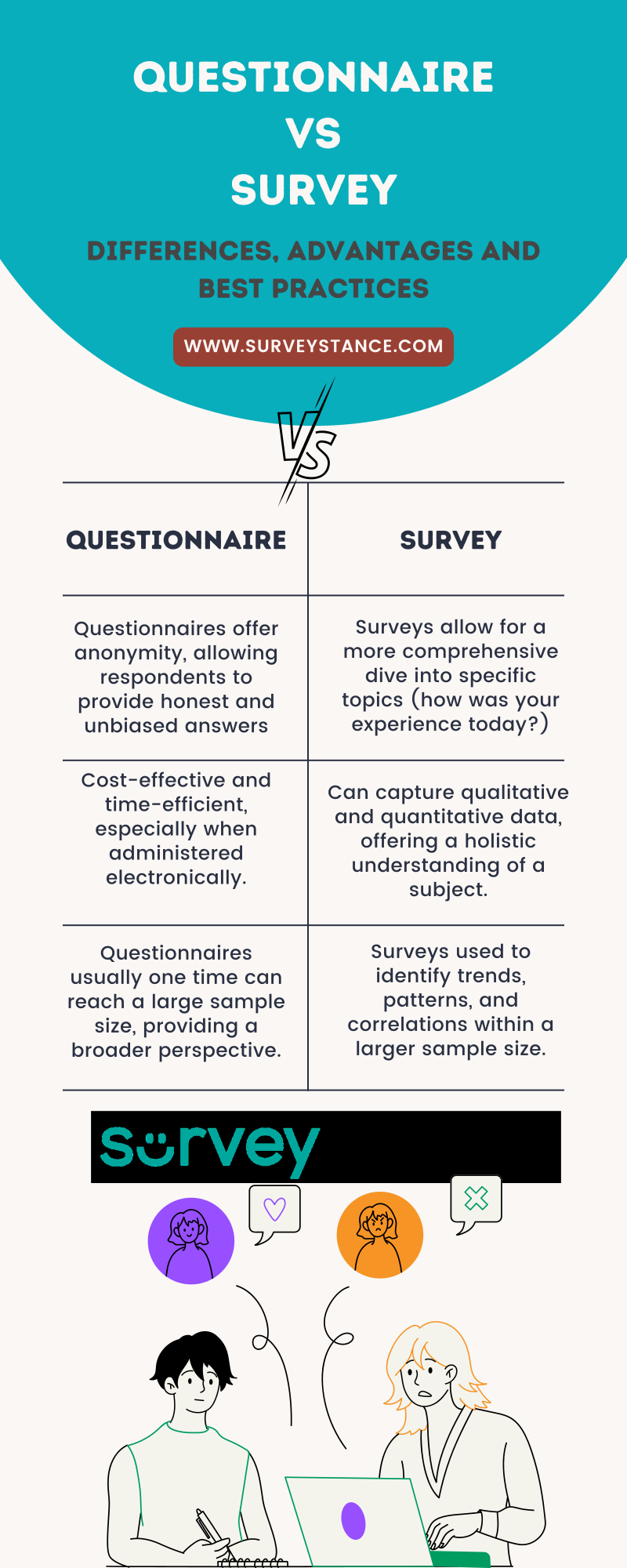
Questionnaires offer anonymity that allow respondents to provide honest and unbiased answers.
They are cost effective and time efficient.
Questionnaires can reach a large population that provides a broader perspective.
The data collected from questionnaires can be easily quantified and analyzed.
There are many feedback tools to help questionnaire data collection.
Limitations of Questionnaires
The accuracy of responses relies on the honesty and comprehension of respondents.
Complex or sensitive topics may require additional clarification whereas questionnaires may not provide.
The response rate for questionnaires can vary. This results in sample bias.

Pros and Cons of
Surveys
Advantages of Surveys
Surveys allow for a more comprehensive exploration of a specific topic, providing in-depth insights.
They can capture qualitative and quantitative data, offering a holistic understanding of the subject.
Surveys enable researchers to identify trends, patterns, and correlations within a larger sample size.
Limitations of Surveys
Conducting surveys can be time-consuming, especially when targeting a sizable population.
Surveys may introduce response bias if the questions lead or respondents feel pressured to provide socially desirable answers.
Analyzing and interpreting survey data can be complex, requiring careful statistical analysis.
Use Cases: Difference Between Questionnaire and Surveys in Action
Understanding when to use a questionnaire vs survey will make or break your data collection strategy. Let’s review some key use cases and real-world examples to illustrate this.
Customer Feedback
Customer feedback is critical for improving products and services. Using the right data collection method (questionnaire or survey) ensures actionable insights are achieved.
- Questionnaire: A retail brand like Nike uses a short questionnaire at checkout to gauge customer satisfaction with the shopping experience. A quick 5 question survey asking about staff helpfulness and product availability.
- Survey: Starbucks conducts annual customer surveys to deeply assess brand perception across many regions. These include questionnaires but also analyze responses to identify trends like preferences for new drink flavors.
Create similar surveys with SurveyStance’s AI-Powered Survey Tools such as Free Survey Evaluation Tool – Check your Effectiveness Survey Score.
SurveyStance Free Form Survey Text Analyzer – AI tool for text sentiment analysis on your free form text comments.
Market Research
- Questionnaire: A fitness startup like Fitbit might have an in app questionnaire asking gym members about their preferred workout features like tracking or gamification to gain rapid product iteration.
- Survey: PepsiCo runs market research surveys to study consumer preferences for products like low sugar beverages with focus groups and data analysis to inform product development.
Employee Engagement
- Questionnaire: A tech firm like Google uses a brief questionnaire to collect anonymous feedback after internal team meetings that focus on specific aspects like collaboration and clarity of goals.
- Survey: A multinational like Deloitte conducts annual employee engagement surveys (using questionnaires) to gather detailed employee data to measure workplace satisfaction trends across departments.
Academic Research
- Questionnaire: A university researcher studying mental health might use a questionnaire to collect standardized responses from students about stress levels.
- Survey: A public health study on vaccine hesitancy might involve a survey that uses questionnaires alongside interviews to draw forward thinking conclusions about population attitudes.
Choosing the Right Method: Factors to Consider
When deciding between questionnaires and surveys, several factors should be taken into account:
Research objectives and the depth of information required.
Target audience characteristics and preferences.
Time and resource constraints.
Budget Limitations and technological capabilities.
Carefully evaluate these factors to determine which method best fits your specific needs and goals.
Frequently Asked Questions About Questionnaire vs Survey
What is the main difference between a questionnaire and a survey?
A questionnaire is a set of questions designed to collect specific data, often used within a survey. A survey is a broader process that includes designing and distributing the survey as well as analyzing responses. For example, a questionnaire might ask about customer preferences while a survey encompasses gathering and interpreting that data.
When should you choose a questionnaire over a survey?
Use a questionnaire for quick data collection that is targeted (like a feedback form after a purchase). Consider going with a survey for more in depth responses to understand trends or employee satisfaction.
Can you use both a questionnaire and a survey together?
Yes, absolutely and most of the time you should. A survey often incorporates a questionnaire as its data collection tool. Example, a company running a customer satisfaction feedback survey might use a questionnaire to gather responses but then analyze the data with statistical tools. SurveyStance’s AI tools can streamline this process ensuring accurate results.
How do AI tools improve questionnaire vs survey processes?
AI tools like SurveyStance enhance both by automating question design, optimizing response rates while making data analysis more efficient. AI can reduce analysis time by up to 40% and improve response quality by suggesting tailored questions based on audience demographics.
Which is better for market research: questionnaire or survey?
Most of the time surveys are better for market research. Questionnaires are ideal for quick insights while surveys are better for comprehensive market research.
Questionnaires and surveys are indispensable tools for gathering valuable insights in data collection. Questionnaires are ideal for collecting individual data, while surveys offer a more comprehensive approach for larger sample sizes. By understanding the nuances and considering key factors, you can effectively utilize these methods to uncover meaningful data that drive informed decision-making.
How AI Tools Like SurveyStance Enhance Questionnaire vs Survey Processes
In the questionnaire vs survey debate, AI-powered tools like SurveyStance elevate both methods. These platforms streamline every step from survey design to data analysis. This delivers faster, more accurate results.
Here’s how:
- Smart Question Design: SurveyStance AI will analyze target audience to suggest questions that boost response rates. This includes reviewing and scoring already created questions to provide guidance.
- Improved Response Rates: By optimizing question phrasing, AI increases completion rates by up to 25%, based on SurveyStance.
- Faster Data Analysis: AI cuts analysis time by more than 40% by automating tasks like sentiment analysis or trend detection. Companies that once took weeks to analyze feedback results can now get insights in hours with tools like SurveyStance’s real time dashboards.
- Personalized Insights: AI identifies patterns in responses that are not always obvious to the average person reviewing the results. Looking at trends like responses by time of day that might peak.
Ready to transform your data collection? Try SurveyStance’s AI-Powered Survey Tools to create smarter questionnaires and surveys today.