

What’s the one thing (other than revenue) that every business needs?
We’ll give you a hint: Customer Feedback!
Surprised by that answer?
You shouldn't be. Receiving your customer's input on your business opportunities and how it can improve is priceless. It's how you take your company from standard to top shelf!
Fast forward to receiving feedback... what do you do with it?
How do you take what your clients said and turn that into real-life action?
Well, there are several things you can do, or not do. And that is what we want to help you with today.
4 Ways to Use Customer Feedback
These four ways of utilizing customer feedback will strengthen customer relationships and loyalty based on the service you provide. Let’s get right to it.
1. Truly Listen
Listening is the most used form of communication.
Then why are we brining this up?
Because there is an abundance of data and studies that show we are actually poor active listeners- generally speaking. I think most of us can agree with that. Active listening is simply focusing your full attention on what others are saying.
In the service world, many find themselves thinking of how to respond before the other person has even finished their sentence! Non- active listening is a straight shot to failure. Listen first and then act.
It's important to ask yourself, "are our actions based on hard facts or on what we think people want?". Customer feedback is pretty cut-and-dry. So, before you make any big decisions and start implementing them, take a second to analyze what people are saying and genuinely, truly absorb it.
Yes, even if that means admitting what you thought was great is not. Often times companies hear customer feedback but dismiss the feedback because of some assumptions that may or may not be true. An example of this is if you are a restaurant manager and you receive a customer complaint on yelp saying the food was terrible and was cold.
You might assume the person is overreacting and that it's not possible for this to happen at your restaurant. It's important to objectively review the customer feedback to improve service for your company.
2. Make Informed Business Decisions
Customer feedback should be the foundation of your business decisions. When you implement a change to your service, make that change based on feedback if 1) your budget allows for it, 2) it is feasible, and 3. it benefits the majority of your customers. For example, if your customer feedback shows that people are unhappy with the timeliness of x service, find ways to give x service a speed boost.
Remember that change is good! And to survive among the competition, making informed business decisions is a must.
4. Follow-Up with Customer
Once your customers finish giving you feedback, the process doesn’t stop there. Always follow-up with your survey participants. You can send them an email, text, call, or letter in the mail thanking them for their response.
By following-up after the fact, it shows them that you really care about what they have to say. If you are lucky, they might even share more feedback that they left out in their initial response. People tend to open up more once you show that you are taking their input seriously.
And also because now they know you may actually do something about it!
Using Customer Feedback to Improve Service
Knowing how to use your customer feedback to improve service is an incredible tool for your business.
How do you know what to improve on without feedback?
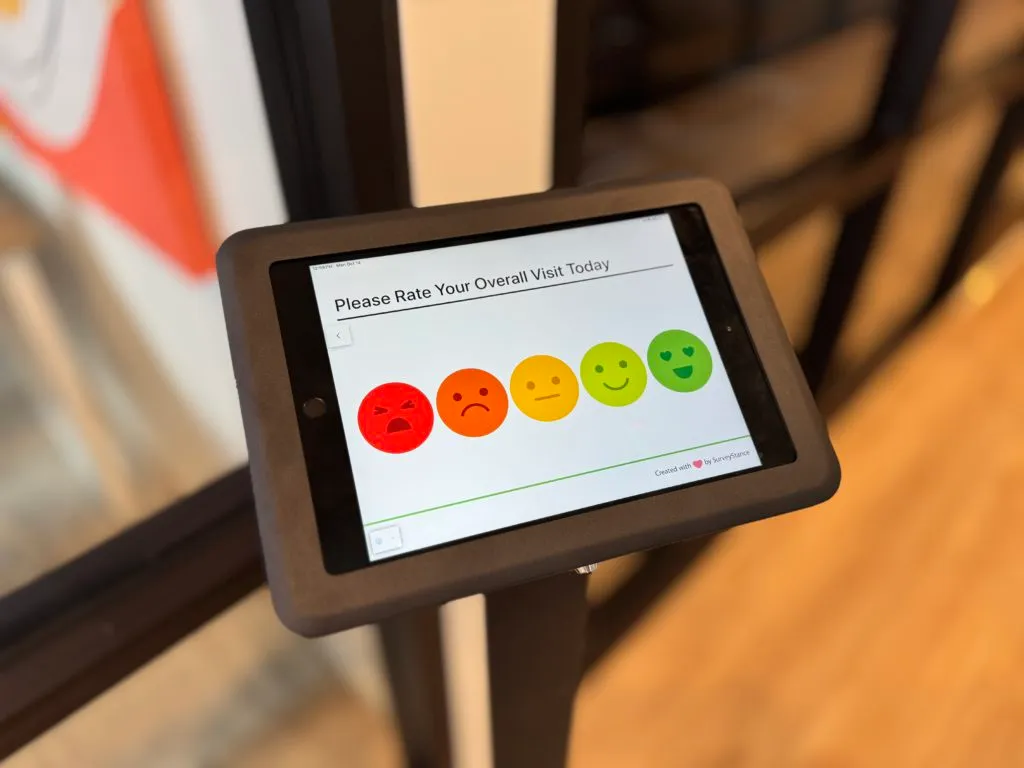
Growing as a business and utilizing client input go hand in hand. If you haven’t started gathering feedback yet, you’re missing out on a world of information. In-person kiosks are excellent for allowing your customers to share their feedback before they even leave your location, and online surveys are the best for companies collecting digital feedback online.
Try both to see what works for you!
EMPLOYEE FEEDBACK
Build a faster feedback loop for every team.
Use kiosk, QR code, and OneClick surveys to capture employee sentiment while the experience is still fresh.
Discover the best cafeteria feedback survey solutions to gather actionable employee feedback. Improve dining experiences with a modern feedback survey kiosk.

Check out these Top Employee Meeting Feedback Survey Questions and how to use employee feedback to improve meeting effectiveness. Plus 3 to NEVER ask!

Survey vs Feedback comparing difference between Surveys and Feedback as it relates to customer and employee feedback to improve overall customer satisfaction.